A missing tooth may seem like a small problem, especially when there is no pain. But over time, it can affect how you eat, speak, smile, and feel around others. The empty space may also allow nearby teeth to shift and make chewing less comfortable. Dental implants are one of the most dependable options for replacing missing teeth and restoring everyday function.
What Is a Dental Implant?
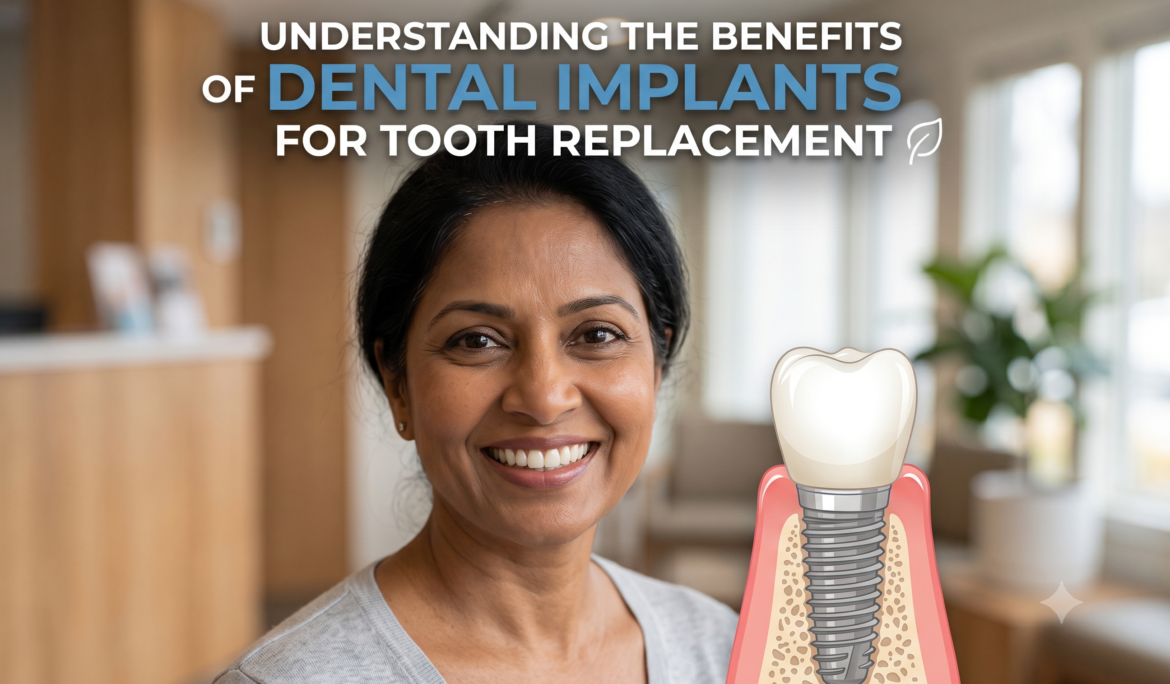
A dental implant is a small post placed in the jawbone to act like the root of a missing tooth. After the area heals, a custom-made crown is fixed on top. The result is designed to look and work much like a natural tooth. Implants can replace one tooth, several teeth, or support certain types of dentures. Because the implant is held by the jawbone, it gives firm support to the replacement tooth.
A More Natural Look and Feel
One of the main benefits of dental implants for tooth replacement is their natural appearance. The crown is made to match the shape, size, and colour of the nearby teeth. This helps the new tooth blend into the smile instead of looking separate.
The implant also feels more stable than a removable tooth. It does not usually move while speaking or eating, which can make meals and conversations feel easier. After getting used to the implant, many people find that they stop thinking about the missing tooth.
Better Comfort While Eating
Missing teeth can make it difficult to bite or chew certain foods. Loose dentures may also move or create sore areas. Dental implants provide steady support, helping many people eat with greater comfort and confidence.
This does not mean every food can be eaten immediately after treatment. The implant needs time to heal, and the dentist may suggest softer foods during the early stage. Once healing is complete, the replacement tooth can usually manage normal chewing in a way that feels close to a natural tooth.
Protection for Nearby Teeth
A traditional dental bridge may require the teeth on both sides of the gap to be shaped so they can support the replacement. A single dental implant can often fill the space without drilling healthy neighbouring teeth. This allows more natural tooth structure to remain untouched.
Support for the Jawbone
Natural tooth roots help stimulate the jawbone. When a tooth is lost, the bone in that area may slowly reduce because it no longer receives the same pressure from chewing. An implant replaces the missing root and can help preserve the surrounding bone. This may also support nearby teeth and the natural shape of the face.
A Long-Term Tooth Replacement Option
Dental implants are designed to last, but they are not maintenance-free. Their success depends on good oral hygiene, healthy gums, regular dental visits, and personal factors such as smoking, medical conditions, and bone health. Brushing, cleaning between the teeth, and attending follow-up appointments remain important after treatment.
Are Dental Implants Right for Everyone?
Dental implants can be a useful choice, but they may not suit every patient. A dentist must first check the gums, jawbone, medical history, and remaining teeth. Some people may need gum treatment, bone grafting, or another type of tooth replacement. The process also takes time because the jawbone needs to heal around the implant before the final tooth is fitted.
Get Clear Guidance Before Deciding
Choosing how to replace a missing tooth is a personal decision. The right option depends on your oral health, comfort, expectations, and budget. At Smriti Raj Dentistry, our role is to explain the available choices clearly, answer your questions, and help you decide whether dental implants may be suitable for you.
If you are considering tooth replacement, book a consultation for a careful assessment and honest guidance. A simple discussion with a dentist can help you compare your options and make a decision that feels right for your smile.