Case Study: Single-Visit Root Canal Treatment for Two Premolars
Root canal treatment is often associated with multiple appointments, which can make patients concerned about the time involved in treatment. However, with appropriate case selection, careful planning and precise clinical execution, selected cases can be completed in a single visit.
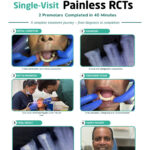
At Smriti Raj Dentistry, Dwarka, New Delhi, we recently treated a patient who required root canal treatment for two premolar teeth. Both teeth were treated during the same visit, with the complete procedure completed in approximately 40 minutes.
The aim was to treat the affected teeth carefully while preserving the patient’s natural teeth and providing an efficient and comfortable treatment experience.
The Clinical Challenge
The patient presented with two premolar teeth that required endodontic treatment.
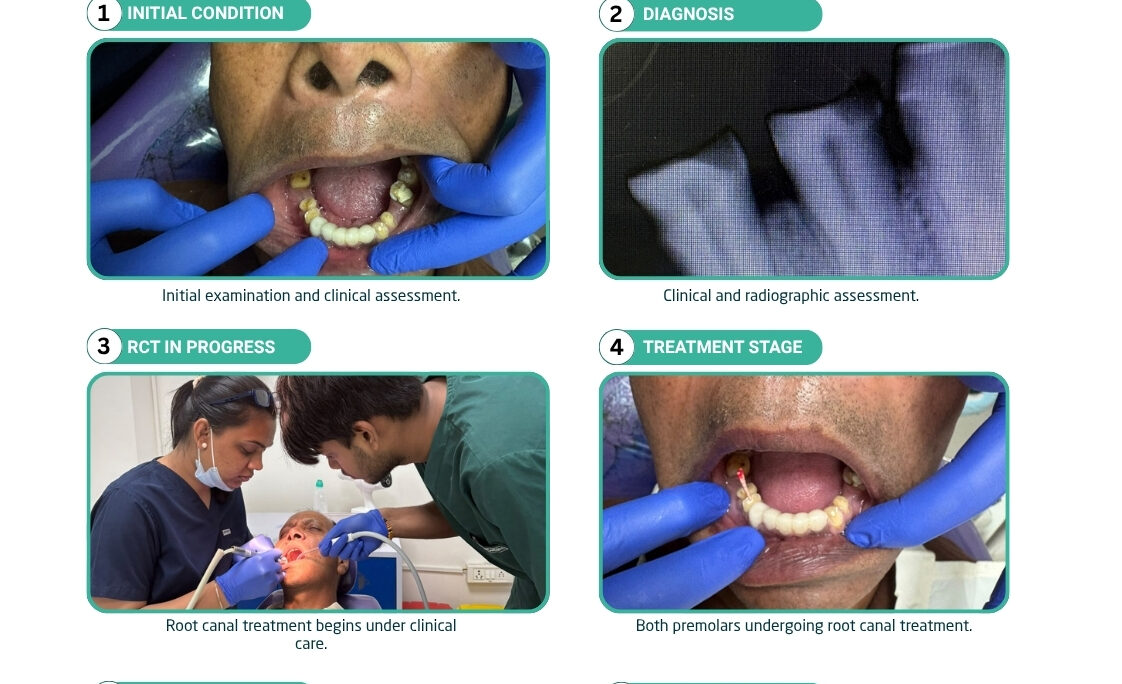
Before starting the procedure, a detailed clinical examination was carried out along with radiographic evaluation. The radiograph helped us assess the teeth and their root anatomy and provided the information needed to plan the treatment.
Following the clinical and radiographic assessment, root canal treatment was planned for both premolars.
The main treatment objectives were to:
- Clean and prepare the root canals thoroughly
- Properly fill and seal the canals
- Preserve the natural teeth
- Complete the treatment efficiently
- Maintain patient comfort throughout the procedure
Treatment Approach
The treatment was carried out systematically, with each stage completed carefully before moving to the next.
1. Clinical & Radiographic Assessment
The two premolars were examined clinically and evaluated radiographically before treatment. This helped us understand the condition of the teeth and their root anatomy and plan the procedure accordingly.
2. Access & Canal Preparation
Once the treatment plan was established, access to the root canal system was prepared. The canals were then carefully prepared using appropriate endodontic techniques.
3. Cleaning & Shaping
The canals were thoroughly cleaned and shaped to prepare them for filling. This stage helps prepare the canal spaces for proper sealing as part of the root canal procedure.
4. Root Canal Filling & Sealing
After adequate cleaning and preparation, the canals were filled and sealed to complete the endodontic treatment.
Both premolars were treated during the same appointment.
5. Post-Treatment Radiographic Evaluation
A final radiograph was taken after treatment to evaluate the completed root canal treatment and provide a post-treatment view of the treated teeth.
Treatment Outcome
The root canal treatment of both premolars was completed during a single visit, in approximately 40 minutes.
The post-treatment radiograph demonstrates the completed endodontic treatment, while the patient’s final photograph reflects a positive response following the procedure.
For this case, the objective was not simply to complete the treatment quickly. The priority was to combine proper assessment, careful treatment planning and precise execution while preserving the patient’s natural teeth.
Why Preserving the Natural Tooth Matters
Whenever a natural tooth can be predictably treated and restored, preserving it can help maintain the patient’s natural dentition and oral function.
Root canal treatment can allow a compromised tooth to be treated and retained rather than removed, provided the tooth has a suitable prognosis and can be appropriately restored afterwards.
For this patient, preserving the two premolars was an important part of the treatment plan.
What Made This Case Different?
The key feature of this case was the ability to complete root canal treatment for two premolars during a single visit.
With appropriate case selection and a well-planned clinical workflow, selected endodontic cases can sometimes be completed efficiently without compromising the essential stages of treatment.
In this case:
2 Premolars
1 Visit
Approximately 40 Minutes
The final radiographic evaluation showed the completed root canal treatment, followed by a positive clinical outcome for the patient.
Every root canal case is different, and treatment time depends on factors such as the tooth involved, its anatomy, the clinical condition and the individual treatment requirements.
Patient-Centred Endodontic Care at Smriti Raj Dentistry
Every root canal case begins with understanding the condition of the tooth and planning treatment according to the individual clinical situation.
At Smriti Raj Dentistry, our approach is to combine careful clinical and radiographic assessment with appropriate treatment planning and precise endodontic care.
Our focus includes:
- Accurate diagnosis and assessment
- Individualised treatment planning
- Precise endodontic treatment
- Preservation of natural teeth whenever appropriate
- A comfortable and efficient patient experience
The goal is not simply to complete a procedure, but to provide treatment that is appropriate for the tooth and the patient’s individual needs.
A Case That Highlights the Importance of Planning and Precision
This case demonstrates how appropriate case selection, careful planning and precise clinical execution can allow two premolar root canal treatments to be completed during a single visit.
For patients who have been advised root canal treatment, the number of appointments and treatment time can vary from case to case. What matters is having the tooth properly evaluated and choosing a treatment approach that is appropriate for its condition.
If you are experiencing persistent tooth pain, sensitivity, discomfort while chewing, or have been advised to undergo root canal treatment, a clinical and radiographic evaluation can help determine the appropriate course of treatment.
Smriti Raj Dentistry
Trusted speciality care for the smile that matters most.
Dr. Smriti Bhargava, MDS – PGI Rohtak
Basement Floor, Plot No. 54, Sector 13, Dwarka, New Delhi – 110075
+91 8527275521 | +91 9717732131
Individual treatment outcomes vary depending on the clinical condition, tooth anatomy and overall oral health. The case presented is for educational purposes.