Your dentist just mentioned the word “crown,” and suddenly you may have a lot of questions.
Is my tooth badly damaged? Will I need an extraction? Is the treatment painful? And how much will it cost?
Don’t worry, a dental crown is not as complicated or scary as it may sound. In many cases, a crown is actually recommended to protect a damaged or weakened tooth and help you keep your natural tooth for longer.
So, let’s understand what a dental crown is, when you may need one, and how it protects your tooth.
What Is a Dental Crown, Really?
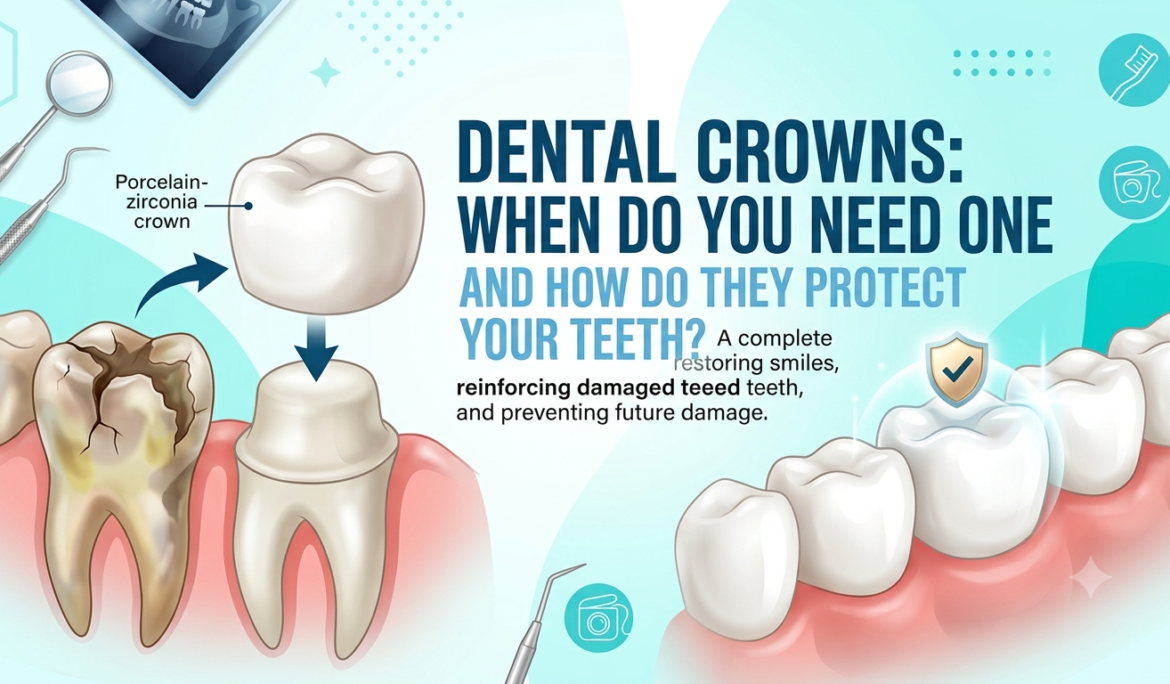
Think of a dental crown as a protective cap placed over a damaged or weakened tooth. Your natural tooth remains underneath, while the crown covers the visible portion above the gum line.
The crown is custom-made to fit your tooth in terms of shape, size, and colour, helping it look and feel as natural as possible. Once it is placed, it can restore both the appearance and function of the tooth.
In simple words, a crown gives your tooth the extra protection it needs when a regular filling may no longer be enough.
When Do You Actually Need a Dental Crown?
You might need a dental crown for several reasons. Some of the most common include:
After a Root Canal
A tooth that has undergone a root canal treatment can become weaker. A crown can help protect it from cracking and restore its normal function.
A Cracked or Broken Tooth
If a tooth is significantly cracked or broken, a crown may help protect the remaining tooth structure and prevent further damage.
A Large Cavity
When decay has damaged a large portion of the tooth, there may not be enough healthy tooth structure to support a regular filling. In such cases, a crown may be recommended.
A Weak or Worn-Down Tooth
Grinding, acid erosion, or other factors can gradually wear down teeth. A crown can help strengthen and restore a severely worn tooth.
After a Dental Implant
When a dental implant is used to replace a missing tooth, a dental crown is typically placed on top of the implant to restore its appearance and function.
Cosmetic Improvement
In selected cases, crowns may also be used to improve the shape, size, or colour of a tooth.
How Does a Crown Protect Your Tooth?
A dental crown does more than simply improve the appearance of your smile. It can provide several important benefits.
- Protection: It covers the weakened tooth and helps protect it from further damage.
- Strength: A crown helps restore the tooth’s ability to handle normal biting and chewing forces.
- Function: It can help you chew more comfortably and use the tooth normally again.
- Restoration: A crown restores the shape and appearance of a damaged tooth while preserving as much natural tooth structure as possible.
The goal is not simply to cover the tooth—it is to help preserve and restore it whenever possible.
What Is the Dental Crown Procedure Like?
The process is usually straightforward and commonly involves two main visits.
Visit 1: Your dentist examines and prepares the tooth by removing damaged or decayed portions and shaping it to receive the crown. Impressions or digital scans are then taken so the permanent crown can be made accurately. A temporary crown may be placed while you wait.
Visit 2: Once the permanent crown is ready, your dentist checks its fit, shape, and bite before securely cementing it in place.
Your dentist will use appropriate local anaesthesia during tooth preparation when required, helping keep the procedure comfortable.
How Long Does a Dental Crown Last?
A dental crown can last many years with proper care. Its lifespan depends on factors such as the material used, your bite, oral hygiene, and everyday habits.
To help your crown last longer:
- Brush twice a day.
- Clean between your teeth regularly.
- Avoid biting very hard objects.
- Visit your dentist for regular checkups.
- Address teeth grinding if it is affecting your teeth.
Remember, a crowned tooth still needs regular dental care because the natural tooth and surrounding gums remain important.
Crown vs. Extraction: Why Saving Your Natural Tooth Matters
If a tooth is damaged, extraction is not always the first or only option. When the tooth can be safely restored, preserving your natural tooth is often preferable to removing it and replacing it later.
Depending on the condition of the tooth, your dentist may recommend a filling, crown, root canal treatment, or another procedure. If the tooth cannot be saved, replacement options such as dental implants, bridges, or dentures may be considered.
The right treatment depends on your individual dental condition.
When Should You Consider a Dental Crown?
If you have a cracked tooth, large cavity, severely worn tooth, or a tooth that has undergone root canal treatment, it is worth getting it examined rather than waiting for the problem to become worse.
A small issue today can sometimes become a much bigger dental problem if left untreated.
The good news is that an examination can help you understand exactly what is happening and which treatment option is appropriate for you.
Ready to Understand Your Options?
At Smriti Raj Dentistry in Dwarka, we believe patients should understand their treatment before making a decision. Our dental team can evaluate your tooth and explain whether a crown could help protect and restore it.
If you are experiencing tooth damage or have been advised to get a dental crown, schedule a consultation today at +91 8527275521.
Smriti Raj Dentistry
Basement Floor, Plot No. 54, Sector 13, Dwarka, New Delhi – 110075
Your natural tooth is worth preserving – give it the protection it deserves.